Fitness & Wellness
How to Use a CBT Thought Record
A CBT thought record is a structured way to slow down an upsetting moment and test the thought that made it feel so intense. It is often used in cognitive behavioural therapy, but the basic worksheet can also help you practise more balanced thinking at home. This guide walks through each column, gives a worked example, and explains when to reach out for more support.
Want it on paper? This guide pairs with our CBT Thought Record Workbook printable ($3.99).
What a thought record is for
A thought record is not a positivity exercise. Its job is to help you notice the difference between facts, feelings, predictions, and interpretations. When anxiety, shame, anger, or sadness spikes, the mind often jumps to a quick conclusion. The worksheet gives you a slower path: name what happened, write the automatic thought, test the evidence, and create a statement that is fairer and more complete.
Most thought records include the same core pieces: situation, emotion, automatic thought, evidence for the thought, evidence against it, a balanced thought, and a second rating of the emotion. Some versions also ask you to identify cognitive distortions such as catastrophizing, mind reading, all-or-nothing thinking, fortune telling, or discounting the positive. The exact layout matters less than the habit of writing clearly and honestly.
This is general self-help information, not medical advice or a replacement for therapy. If your distress feels unmanageable, if symptoms are getting worse, or if you are thinking about harming yourself, reach out to a doctor, therapist, local emergency service, or a crisis line. In Canada, 9-8-8 is available by call or text for suicide crisis support.
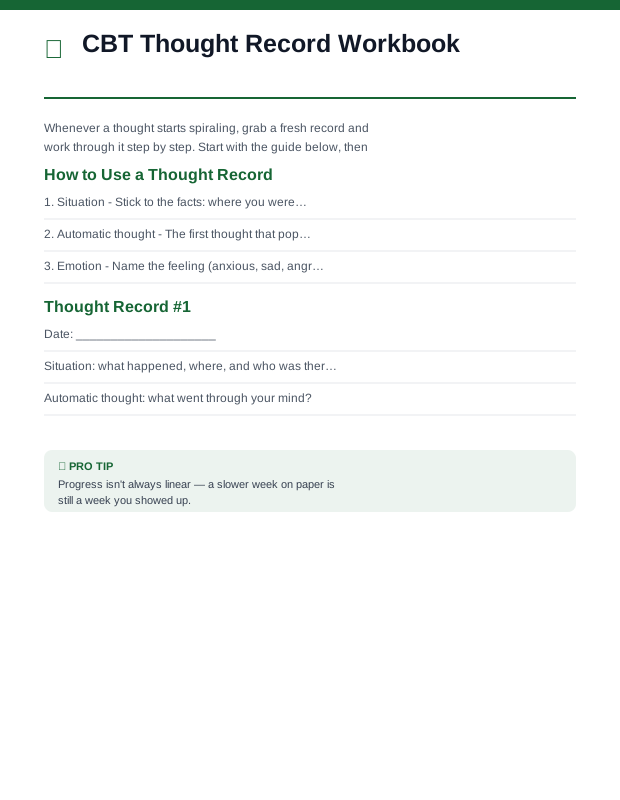 📄 PDF · Instant download11 pages
CBT Thought Record Workbook
A how-to guide plus 10 guided CBT thought records with real writing space — challenge anxious or negative thinking using the same structure therapists use.
Choose one specific moment
The most common beginner mistake is trying to record an entire week of stress at once. A thought record works best when you choose one moment with a clear emotional charge: a text you received, a meeting that went badly, a bill that arrived, a tense conversation, or a mistake you made. If the situation is too broad, the evidence columns become vague and the balanced thought feels fake.
Start with the facts you could prove from a camera recording. Write who was there, where you were, what happened, and when it happened. Avoid words like always, never, disaster, ruined, embarrassing, or rejected in the situation box, because those are usually interpretations. You can write those words later in the automatic thought column if they really did appear in your mind.
- Too broad: Work is horrible and I am failing at everything.
- Better: At 10:15 a.m., my manager asked me to revise three slides during the team meeting.
- Too broad: My friend is ignoring me.
- Better: I sent a message yesterday at 6 p.m. and have not received a reply by lunchtime today.
Write the automatic thought exactly
The automatic thought is the sentence that flashed through your mind before you had time to edit it. It may sound dramatic, unfair, or childish when you see it on paper. That is normal. Do not soften it into something more reasonable yet, because the worksheet cannot help you challenge a thought you did not actually have.
If several thoughts show up, underline the one that carries the biggest emotional punch. Therapists sometimes call this the hot thought. You can spot it by asking, if this thought were true, why would it hurt so much? Once you identify the hot thought, rate how strongly you believe it from 0 to 100 percent. Then name the emotion and rate that too.
- Automatic thought: Everyone thinks I am incompetent.
- Belief rating: 85 percent.
- Emotion: Anxiety 90 percent, shame 75 percent.
- Possible thinking traps: mind reading, catastrophizing, all-or-nothing thinking.
Use evidence like a detective
The evidence columns are where the thought record becomes useful. In the evidence for column, write facts that genuinely support the automatic thought. Do not argue with yourself too early. If something supports the thought, include it. In the evidence against column, write facts that do not fit, alternative explanations, past examples, or what you would tell a friend in the same situation.
The key is to separate evidence from emotional reasoning. Feeling anxious is evidence that you feel anxious; it is not proof that danger is certain. Feeling ashamed is evidence that the situation matters to you; it is not proof that everyone judged you. A printable workbook can help because each column stays visible, which makes it easier to compare the full picture instead of looping through the same fear in your head.
📄 PDF · Instant download11 pagesCBT Thought Record Workbook
A how-to guide plus 10 guided CBT thought records with real writing space — challenge anxious or negative thinking using the same structure therapists use.
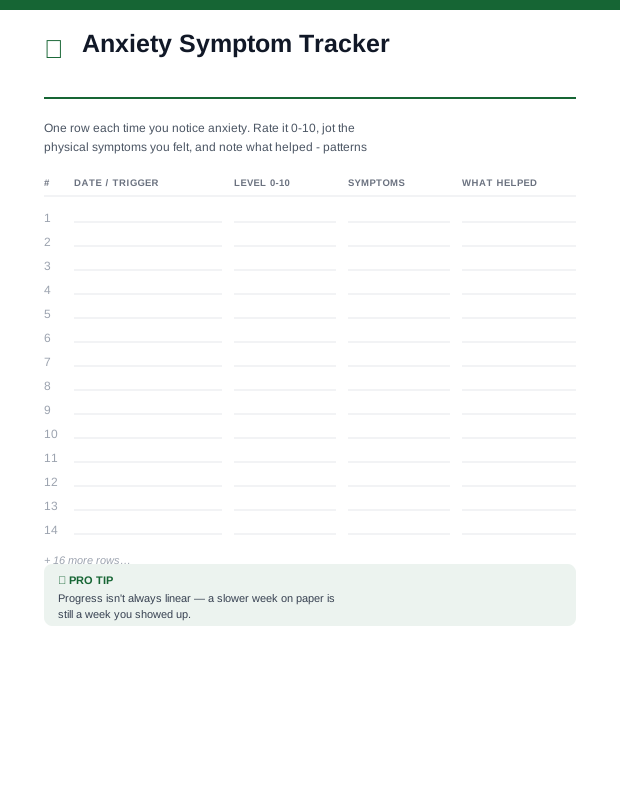 📄 PDF · Instant download2 pages
Anxiety Symptom Tracker
A daily log to track anxiety triggers, physical symptoms, and coping strategies — bring it to your therapist or doctor.
Worked example
Situation: I presented a budget update at work. My manager asked two detailed questions and requested revised numbers by tomorrow. Automatic thought: I looked unprepared and they will stop trusting me with important work. Emotions: anxiety 90 percent, shame 70 percent. Evidence for: I did not have the second answer ready. My voice shook. I need to revise the spreadsheet. Evidence against: I answered the first question accurately. The requested revision is normal budget work, not a warning. Two colleagues were also asked to revise their sections. My manager said thank you at the end and did not criticize my effort.
Balanced thought: I was not fully prepared for one question, and that felt uncomfortable. It does not mean I am incompetent or that trust is gone. I can send a corrected spreadsheet tomorrow and note the assumption I missed. Re-rate: anxiety 55 percent, shame 35 percent. The goal is not to erase emotion. A drop from 90 to 55 is still meaningful because it creates enough space to choose the next action.
Make the balanced thought believable
A balanced thought should not be a slogan. If your original thought is I am going to fail, the replacement probably should not be everything will be perfect. Your brain may reject that immediately. A stronger balanced thought admits the hard part and adds the missing context: this is difficult, I have handled similar tasks before, and I can take one next step.
Try using both-and language. Both the situation was uncomfortable and it is not proof of permanent failure. Both I made a mistake and I can repair it. Both I feel anxious and I can wait for more information. This style is more believable because it does not deny the emotion you started with.
- Weak replacement: I am amazing and nothing is wrong.
- Better replacement: I missed one detail, but I can correct it and ask a clarifying question.
- Weak replacement: Nobody is upset with me.
- Better replacement: I do not know what they think yet, and there are several possible explanations.
Build a repeatable habit
Use a thought record after the first wave of emotion has settled enough for you to write. If you are at a 10 out of 10 panic level, start with grounding, breathing, walking, calling someone safe, or using a coping skill before you analyze the thought. Later, fill in the record while the details are still fresh.
One or two records per week is enough for many people to notice patterns. You may find that the same thinking trap appears often, or that certain situations consistently trigger anxiety symptoms. Pairing a thought record with an anxiety symptom log can make those patterns easier to discuss with a therapist, doctor, or counsellor.
📄 PDF · Instant download2 pagesAnxiety Symptom Tracker
A daily log to track anxiety triggers, physical symptoms, and coping strategies — bring it to your therapist or doctor.
Frequently asked questions
How long should a CBT thought record take?+
A simple record can take 10 to 20 minutes. A difficult situation may take longer, especially while you are learning the columns.
Do thought records work for anxiety?+
They can help many people notice and challenge anxious thinking patterns, but they are not a substitute for professional care when anxiety is severe or persistent.
What if I cannot find evidence against my thought?+
Ask what a kind friend would say, whether there are other explanations, and whether the thought uses words like always, never, or definitely.
Should I do a thought record during a panic attack?+
Usually it is better to use grounding or breathing first, then complete the worksheet once your body is calmer.
Printables for this
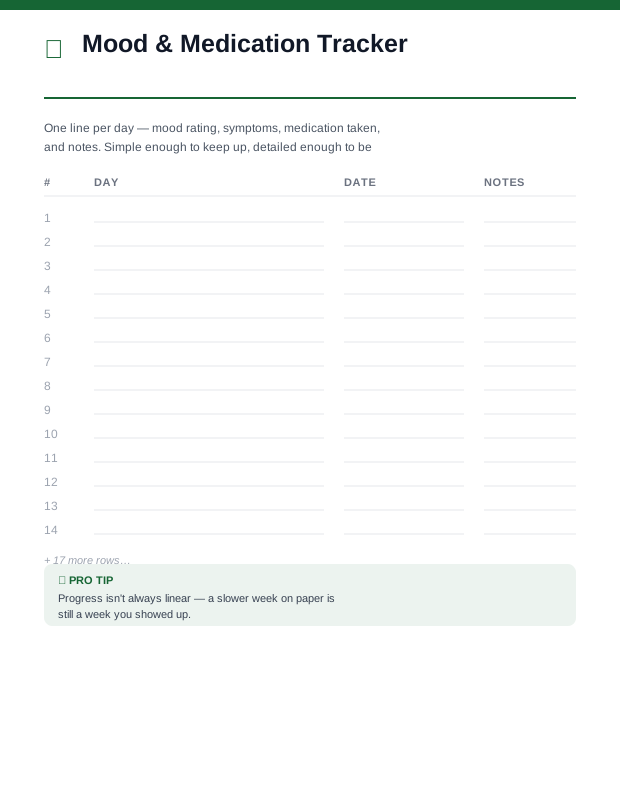 📄 PDF · Instant download2 pages
Mood & Medication Tracker
A simple daily log for mood, symptoms, and medication/dosage — bring it to your next doctor's appointment.
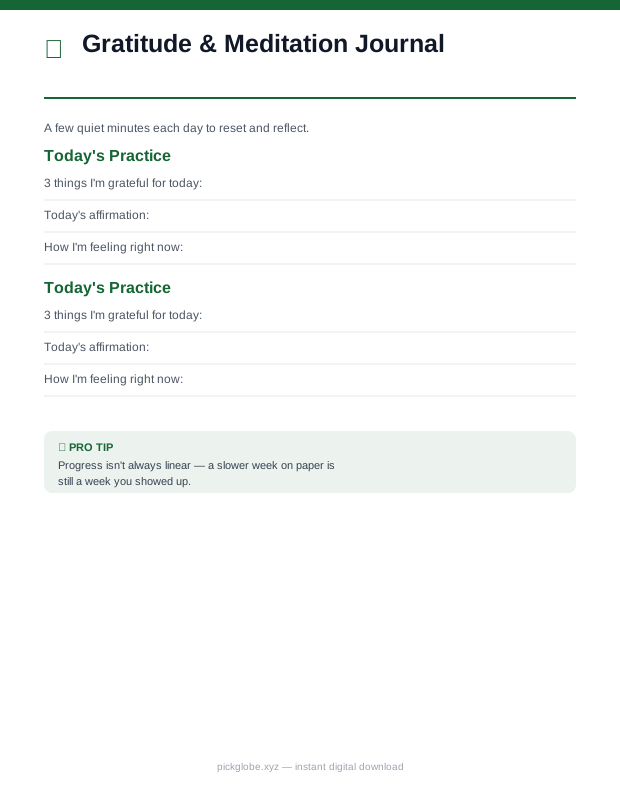 📄 PDF · Instant download8 pages
Gratitude & Meditation Journal
A 7-day mindfulness journal — breathing exercises, body-scan check-ins, gratitude, affirmations, and evening reflection to build a daily meditation habit.